

Do you feel that cold, sharp knot tightening in the pit of your stomach the moment you see a calendar? That is not just "nerves." That is a physical hijack of your potential. Most students treat their brains like a filing cabinet. They try to shove more information into a drawer that is already jammed shut by fear.
The truth is simple. You do not have a "study" problem. You have a "state" problem. When your physiology is locked in a fight-or-flight response, your cognitive functions go offline. You cannot access the information you worked so hard to learn. This guide is your blueprint to reclaiming your mental territory and crushing the pressure.
The Biological Truth of Exam Stress
Your body does not know the difference between a high-stakes mathematics paper and a predator in the wild. When you think about failing, your amygdala fires. It floods your system with cortisol and adrenaline. Your heart rate spikes. Your breathing becomes shallow.
This state is the enemy of performance. To master how to deal with Exam Anxiety, you must first master the machine. You are the engineer of your own nervous system. You have the power to flip the switch from panic to power.
We often see students trying to "think" their way out of a panic attack. That is like trying to talk a fire into putting itself out. You must use physical tools to change the chemical environment of your brain. Only then can the logic return.
1. Radical Physiology Shifting
The fastest way to change your mind is to move your body. If you sit hunched over a desk for ten hours, you are sending a signal to your brain that you are under threat. Your lungs are compressed. Your oxygen intake is low.
The Power Pose
Before you enter the exam hall, find a private space. Stand tall. Stretch your arms wide. Take up space. This is not about ego. It is about biology. Research shows that expansive postures can lower cortisol levels significantly.
Rhythmic Breathing
Most people breathe from their upper chest when they are stressed. This keeps the "threat" signal active. Switch to diaphragmatic breathing. Inhale for four counts. Hold for four. Exhale for eight. The long exhale is the secret key. It tells your vagus nerve to stand down. It forces your heart rate to drop. This is the first step in learning how to deal with Exam Anxiety at a foundational level.
2. The Bulletproofing-Happiness® Perspective: Identity Reframing
Anxiety often stems from an identity crisis. You believe that your entire worth as a human being is tied to a number on a page. This is a fragile way to live.

Consider a suggestion from the Bulletproofing-Happiness® framework. Instead of seeing the exam as a "test" of your value, view it as a "performance" of your current skills. An athlete does not think the scoreboard defines their soul. They see it as feedback.
Language Matters
Stop saying "I am anxious." When you say that, you claim the anxiety as part of your DNA. It becomes a permanent fixture. Start saying "I am experiencing a surge of energy." Energy is neutral. You can use energy. You can channel it into focus. You can use it to sharpen your recall.
You are the sky. The anxiety is just a storm passing through. The sky remains untouched by the rain. When you decouple your identity from the outcome, the pressure evaporates. This shift in mindset is a core pillar of How to Deal with Exam Anxiety.
3. The "Pre-Mortem" Visualisation Strategy
Fear grows in the dark. It thrives on "what if" scenarios that you refuse to face. Most people try to ignore their fears. They push them down until they explode on the day of the exam.
We are going to do the opposite. We are going to shine a light on the monster.
Face the Worst
Sit down and write out the absolute worst-case scenario. You blank out. You fail the paper. You have to resit the year. Look at it. Realise that even in that scenario, you are still alive. You are still breathing. You still have your character.
Build the Bridge
Now, visualise yourself navigating that challenge. Visualise yourself sitting in the chair, feeling the panic, and using your breathing to come back to centre. See yourself answering the easy questions first to build momentum.
By "living" through the fear in your mind, you desensitise your nervous system. You have already "been there." When the real exam starts, your brain recognises the situation. It stays calm because the unknown has become the known. This is a pro-level tactic for anyone wondering how to deal with Exam Anxiety.
4. Strategic Information Loading (The 80/20 Rule)
The feeling of being overwhelmed often fuels anxiety. You look at a massive textbook and feel like a person trying to drink from a firehose. You cannot swallow it all at once.
Focus on the Vital Few
The Pareto Principle states that 80% of your results come from 20% of your efforts. Identify the core concepts that carry the most weight. Master those first. Total mastery of the fundamentals creates a "psychological floor." It gives you the confidence that you cannot fall below a certain mark.
Micro-Goals
Stop looking at the mountain. Look at the next three steps. Break your study sessions into 25-minute sprints. When you finish a sprint, celebrate. Give yourself a physical high-five. This releases dopamine. It turns the study process from a grind into a game.
Managing your workload is a practical way of dealing with Exam Anxiety. A cluttered desk leads to a cluttered mind. Organise your materials. Clean your space. Precision in your environment leads to precision in your thinking.
5. The Environmental Anchor
Your brain associates specific places with specific feelings. If you study in your bed, your brain gets confused. It does not know if it should sleep or solve equations.
Create a "War Room"
Designate one specific chair or desk for high-intensity work. When you sit there, you are a performer. You are a scholar. When you leave that chair, you leave the work behind.
Use Sensory Anchors
Use a specific scent, like peppermint or lemon, only when you study. Wear a specific "exam sweater." On the day of the exam, use that same scent or wear that same item. This triggers "associative memory." It tells your brain it is time to access the files you stored while in that same sensory state.
This is how you build a fortress around your focus. You are no longer a victim of your surroundings. You are the architect. This level of intentionality is the ultimate answer to How to Deal with Exam Anxiety.
The Strategic Path Forward
To truly dominate your mental state, you must move beyond temporary fixes. Many students realise that a self-guided approach only goes so far. When you are ready for a systematic transformation, enrolling in a professional anxiety relief program can be the definitive turning point. These programmes offer more than just advice. They provide a high-pressure environment to test your new skills under the guidance of experts who understand the biological grit of performance stress.
Choosing to join an anxiety relief program in the USA is a powerful declaration that you are no longer willing to let fear dictate your results. By working with a coach or a structured system, you transition from a "survivor" to a "performer." You learn to leverage the energy of your nerves as fuel for your focus. This is the ultimate financial investment in your future. It ensures that when you walk into that exam hall, you are armed with a battle-tested mental fortress.
The Financial Investment in Your Future
Some students hesitate to spend money on better resources or coaching. They see it as a loss. You must change your perspective. Whether it is a specialised tutor or an emotional wellness programme, this is a financial investment in your greatest asset. That asset is your mind.
The returns on a focused, calm, and high-performing brain are infinite. Do not settle for "getting by." Invest in the tools that allow you to dominate the field. Your future self will thank you for the courage you showed today.
Your Call to Power
Knowledge is not power. Execution is power.
You have the strategies. You have the biological map. Now, you must choose to use them. I want you to stand up right now. Shake out the tension in your shoulders. Take one massive breath. Declare out loud: "I am the master of my state."
Do not wait for the "feeling" of confidence to arrive. Confidence is a result of action. Go back to your desk. Pick one topic. Master it for 20 minutes. Prove to yourself that you are in control.
Frequently Asked Questions
What should I do if I have a panic attack during the exam?
Stop writing immediately. Put your pen down. Plant both feet flat on the floor. Grip the sides of your chair. Feel the solid wood or plastic. This "grounds" you in reality. Take three deep, slow breaths into your belly. Remind yourself that this is just a chemical surge. It will pass in 60 seconds if you do not fight it. Once your heart slows, find the easiest question on the page and start there.
How can I stop comparing myself to my classmates?
Comparison is the thief of peace. Your classmates are not your competition. The "you" from yesterday is the only person you need to beat. Their journey, their study habits, and their grades have zero impact on your ability to succeed. Lock your focus on your own lane. When you look sideways, you lose speed.
Is it okay to study the night before the exam?
Light review is fine, yet heavy "cramming" is a disaster for your memory. Your brain needs sleep to "encode" what you learned during the day. If you pull an all-sleeper, you are showing up to a fight with a broken sword. Prioritise seven hours of sleep. It is the best performance enhancer in existence.
Why do I forget everything the moment I see the paper?
This is called "cortisol-induced retrieval failure." Your brain is in survival mode, so it shuts down the "library" to save energy for "running away." By leveraging the physiological shifts mentioned above, you can lower cortisol and unlock the library doors again.
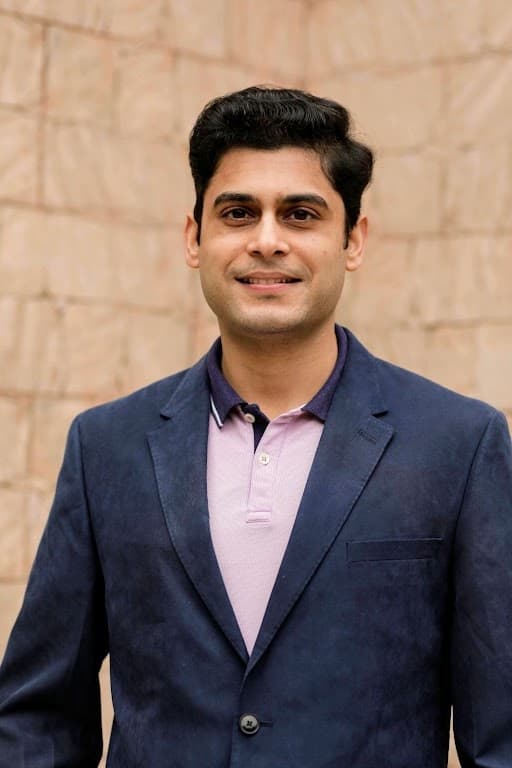
About the Author
Aman Chandra
Dealing with the separation of his parents at the age of two years and battling crippling anxiety and obsessive-compulsive disorder (OCD) at the age of twelve years are just a few of the challenges that Aman dealt with. With a burning desire to learn “how to be happy in life” despite there being so much suffering, Aman began a life-long journey of studying under various global personal and spiritual growth masters, such as Eckhart Tolle and Tony Robbins. With this was born his tried-and-tested Bulletproofing-Happiness™ formula, and he uses the same to coach seekers across the globe on how to overcome challenges and live a truly happy life.
You might also like

How to Stop Overthinking and Worrying: 10 Proven Strategies to Reclaim Your Mental Edge
To master your life, you must first master the machine between your ears. Here is your roadmap on how to stop overthinking and worrying, starting right now.

Problems Faced by Freshers in the Corporate World
Managing fear is a skill. This is a core problem faced by freshers in the corporate world that can be solved by building a powerful personal brand.